
Cocoa Powder
Premium Ghanaian cocoa powder delivering rich flavor, distinctive color, and consistent performance across bakery, confectionery, beverage, dairy, and dessert applications.
Product Overview
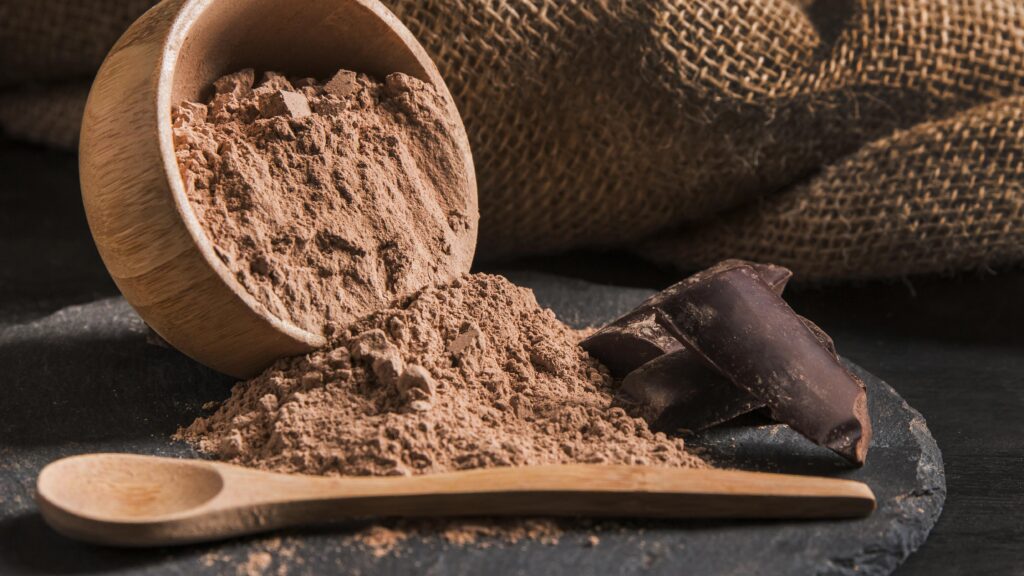
Cocoa solids, also known as cocoa cake, are processed to produce fine unsweetened cocoa powder. Unsweetened cocoa powder is generally available in two main types: Natural and Dutch-Processed (Alkalized).
Dutch-Processed Cocoa Powder, also known as alkalized cocoa powder, is treated with an alkaline agent to reduce its natural acidity. It typically has a reddish-brown color, a milder flavor, and good dispersibility in liquids. Its smooth and delicate cocoa profile makes it suitable for a wide range of bakery and confectionery applications.
Natural Cocoa Powder retains its natural acidity and has a stronger, more intense cocoa flavor. It provides a deep chocolate character to baked products and is commonly used in applications such as brownies, cookies, and chocolate cakes.
QUASTRA’s Cocoa Powder is available in different processing profiles, including natural and alkalized options.
Intended use
Bakery & Pastry
Cakes, brownies, biscuits, cookies, pastries, fillings, and toppings.
Chocolate & Confectionery
Chocolate-based products, fillings, coatings, candies, and desserts.
Beverages
Hot chocolate, cocoa drinks, milk-based beverages, and powdered drink mixes
Dairy & Ice Cream
Ice cream, frozen desserts, milkshakes, mousse, yogurt, and other dairy applications
Spreads & Desserts
Cocoa spreads, sauces, puddings, creams, and dessert formulations.
Cereals & Snacks
Breakfast cereals, snack products, bars, and other cocoa-flavored formulations
Analytical Information and Packaging
CHEMICAL/PHYSICAL
| ANALYSIS | SPECIFICATION | REF. METHOD |
|---|---|---|
|
Moisture Content |
Max 5.0 % |
IOCCC1 (1952) |
|
Total Fat content on Dry matter |
Min 52.0% |
IOCCC14 (1972) |
|
pH |
5.2-6.2 |
IOCCC15(1972) |
|
Fineness 75μm Wet sieve residue |
Min 99.0% |
IOCCC38(1990) |
MICROBIOLOGICAL
| PARAMETER | SPECIFICATION | REF. METHOD |
|---|---|---|
|
Total Plate Count |
Max 5000cfu/g |
ISO 4833 – 2003 |
|
Yeast |
Max 50cfu/g |
ISO 7954 – 1987 |
|
Mould |
Max 50cfu/g |
ISO 7954 – 1987 |
|
Enterobacteriaceae |
Absent /g |
ISO 21528-1 – 2017 |
|
E.coli |
Absent /g |
ISO7251-2005 |
|
Salmonellae |
Absent /375g |
ISO 6579 – 2004 |
SHELF LIFE & RECOMMENDED STORAGE CONDITIONS
|
Storage Temperature |
12°C-20°C |
|
Storage Conditions |
Clean, cool, dry and odourless environment |
|
Relative Humidity |
max 60% |
|
Shelf Life |
24 months after production date |
|
TRANSPORT TEMPERATURE |
max 25°C |
 English
  العربية